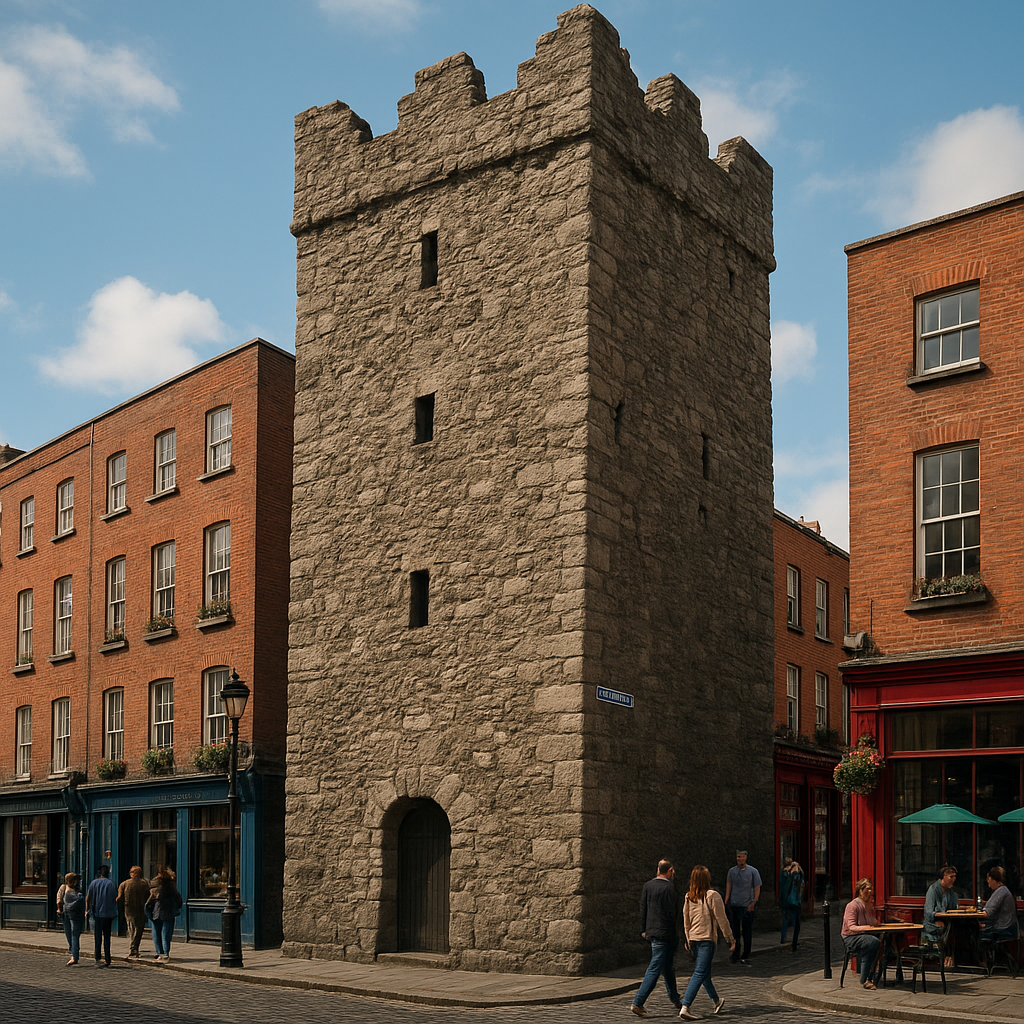
About Isolde's Tower
As a hidden gem among the historic sites in Temple Bar, Isolde's Tower stands as a sturdy reminder of Dublin's medieval past. Perched on the corner of Lower Exchange Street and Parliament Street, this 15th-century stone tower once formed part of the city's defensive walls, built around 1460 to protect against invaders. Legend ties it to the tragic tale of Tristan and Isolde, though its name likely derives from 'Isolde's Island' or a similar old reference. Nestled in the vibrant heart of Temple Bar, it contrasts sharply with the area's lively pubs and street performers, offering a quiet portal to Dublin's fortified history. The Temple Bar neighbourhood, with its cobbled lanes and cultural buzz, amplifies the tower's allure, making it a must-see for anyone wandering the best historic sites in Temple Bar Dublin.
What to Expect
Expect a compact, weathered stone structure rising about 10 metres, complete with a weathered plaque detailing its history from Dublin City Council. The tower features narrow arrow slits for archers and a solid base that has withstood centuries. No interior access, but the exterior tells a story of siege and survival. Surrounding it are narrow streets like Parliament Street leading to the Liffey, with the scent of nearby coffee shops mingling with the river breeze. It's free to visit, perfect for a quick 10-minute stop during a self-guided Temple Bar walking tour.
Insider Tips
Visit at golden hour just before sunset for the best photos, when the stone glows warmly against the sky; the light from the west highlights the texture beautifully. Pair it with a stroll to nearby Ha'penny Bridge for a full Liffey-side historic loop. Locals love pointing out the tower's role in Viking-era defences, as Temple Bar sits atop Wood Quay excavations. Avoid peak pub crawl hours on weekends if you want solitude; instead, come early morning when the neighbourhood stirs gently. For deeper context, download the Dublin City Council's heritage app. Combine with Fishamble Street nearby for a full medieval immersion, and grab a flat white from a Fleet Street cafe post-visit. This spot outshines flashier landmarks with its authentic, understated charm.