About The Book of Kells and Long Room Library
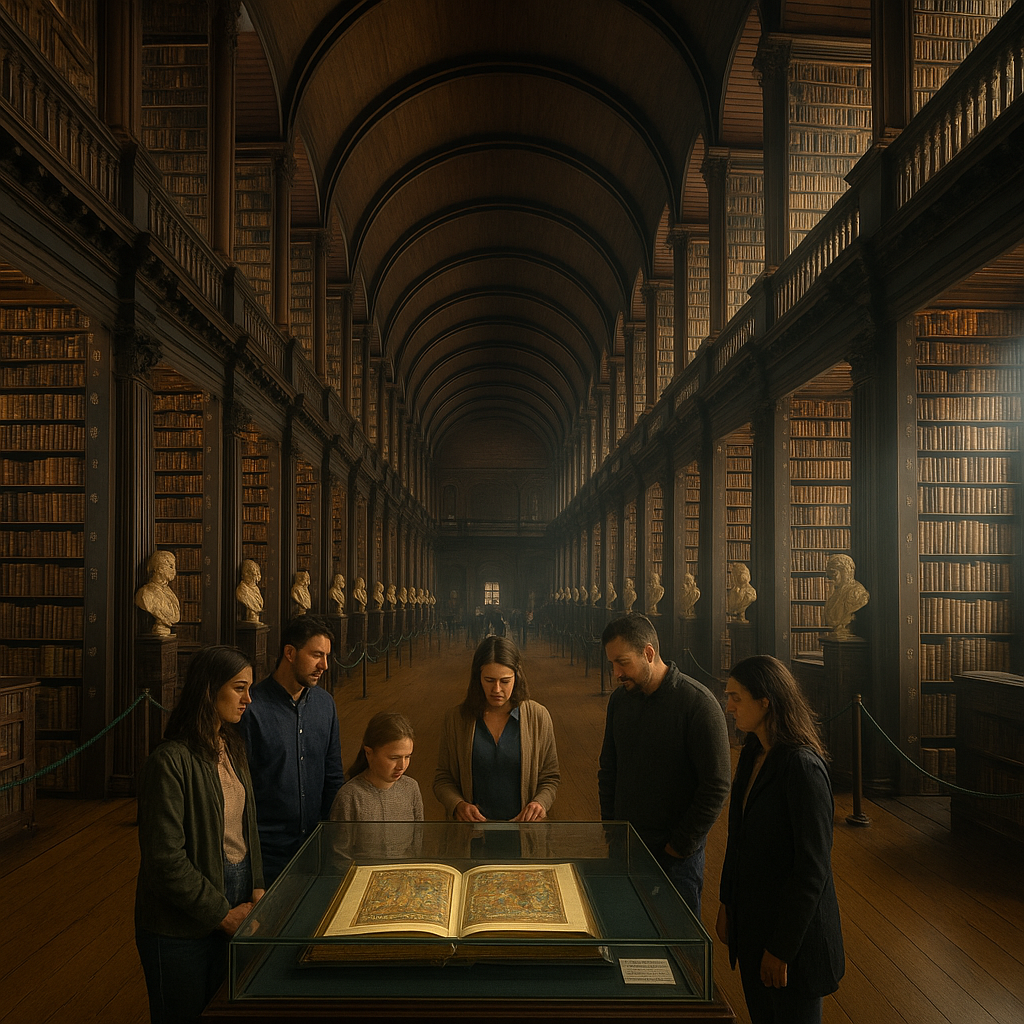
Right at the top of Grafton Street, where the hum of buskers meets historic grandeur, lies Trinity College Dublin's crown jewel: the Book of Kells exhibition and the breathtaking Long Room Library. This isn't just a museum; it's a portal to Ireland's illuminated past. The Book of Kells, created around 800 AD by Celtic monks, dazzles with its intricate knotwork, vivid colours, and mythical beasts, think swirling vines of gold and lapis lazuli that leap off vellum pages. Housed in the purpose-built Old Library, it's one of the best museums in Grafton Street Dublin, drawing over a million visitors yearly. The Long Room above is the real showstopper: a 65-metre barrel-vaulted chamber lined with 200,000 ancient books, busts of philosophers, and the scent of leather bindings. Built in 1732, it's Ireland's largest library and inspired the Jedi archives in Star Wars.
What to Expect
Enter via College Green (a quick jaunt from Grafton Street's shops), snake through the atmospheric exhibition tracing the manuscript's journey, from Iona to Kells Abbey to Trinity in 1661. High-def touchscreens reveal secrets under UV light, while ambient Celtic music sets the mood. Climb to the Long Room for jaw-dropping views down oak shelves to a domed ceiling. Summer crowds mean queues, but the audio guide (included) narrates brilliantly. Feel the hush, touch the cool marble floor, and marvel at how sunlight filters through arched windows onto dusty tomes.
Insider Tips
Book timed tickets online (€18-€25) to skip lines, aim for 9:30am entry from Grafton Street. Visit off-peak (weekdays) for photos without heads bobbing. History nerds: linger for the 1916 Proclamation nearby. Students get discounts; families love the kid-friendly app. Post-visit, grab a flat white at the campus café or wander to the Douglas Hyde Gallery. Fun fact: during WWII, books were evacuated here. Pair with a Grafton Street street performer for full Dublin immersion. This iconic spot defines museums near Grafton Street.
As your local guide, I reckon it's unmissable, pure magic blending 9th-century artistry with 18th-century splendour.